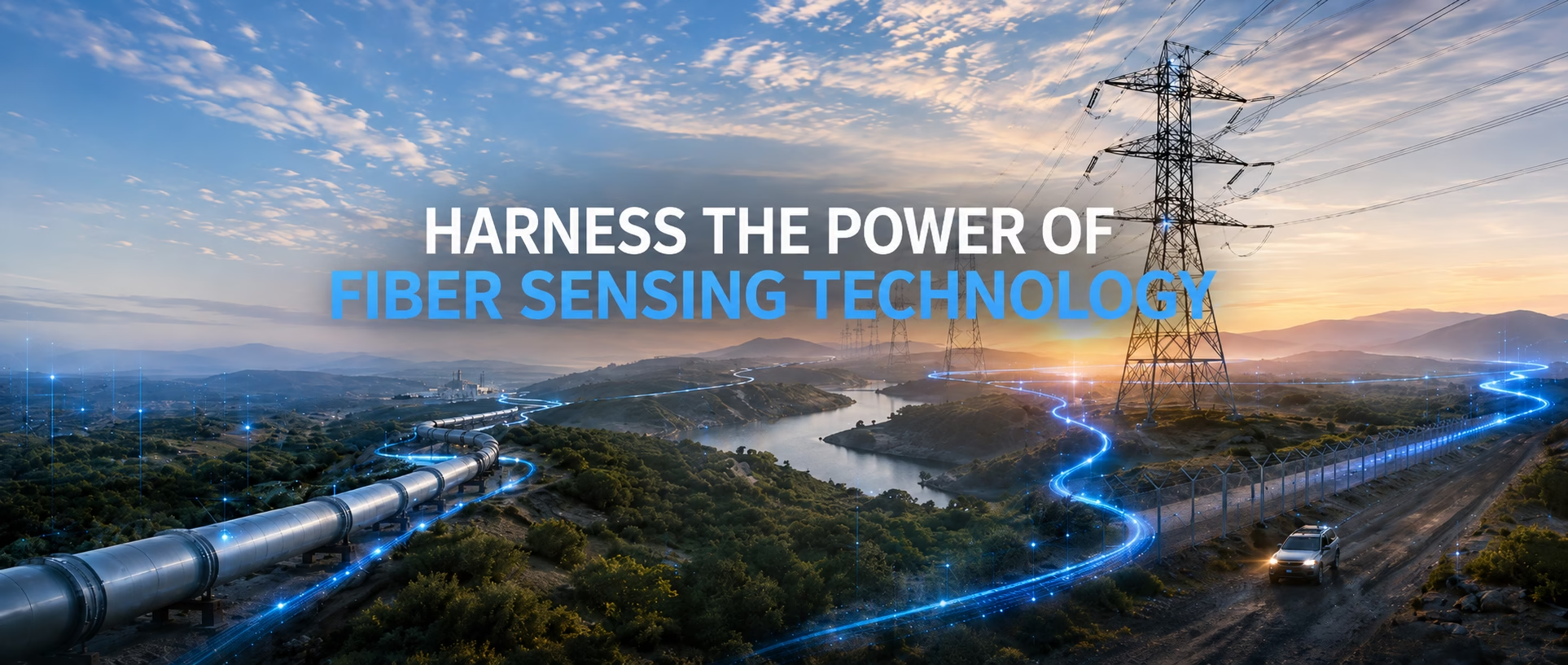
Harness the Power of Fiber Sensing Technology for Critical Infrastructure Monitoring
Critical infrastructure operators face increasing challenges in maintaining the safety, reliability, and efficiency of assets such as power distribution networks, oil and gas pipelines, water networks, and other linear infrastructure. Aging assets, growing demand, environmental risks, and security threats require monitoring solutions that provide continuous visibility and rapid response.
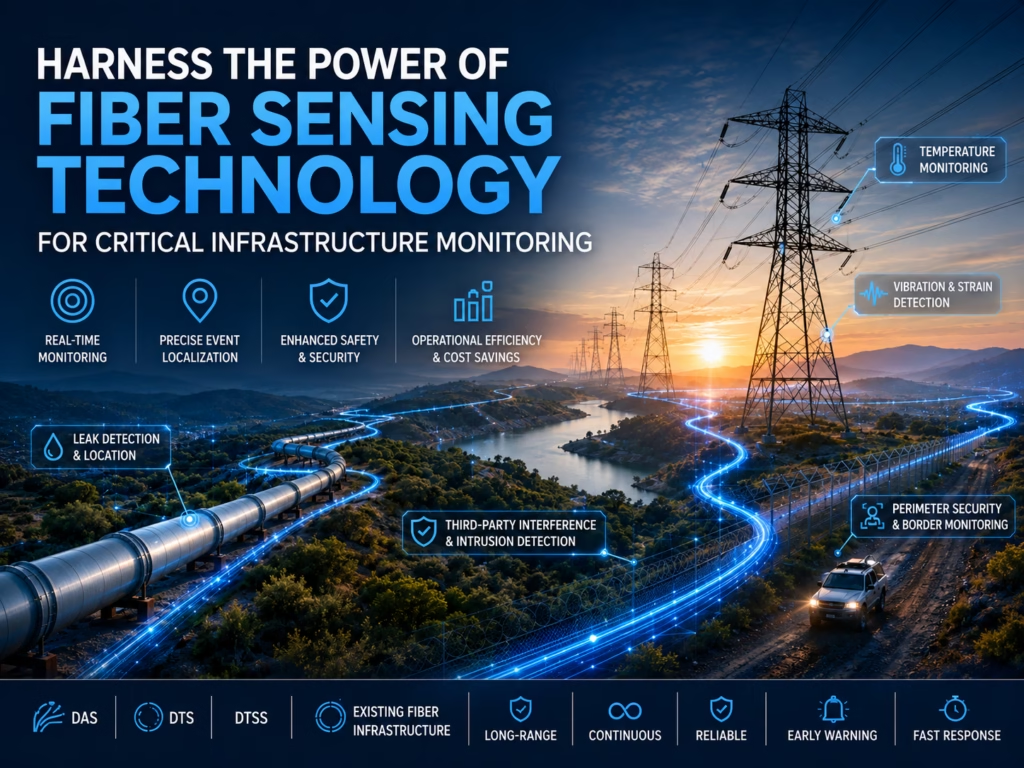
Distributed fiber sensing transforms standard optical fiber cables into intelligent sensors capable of monitoring infrastructure in real time over distances ranging from tens to hundreds of kilometers. Fiber Sensing monitoring system can continuously detect and locate events such as leaks, temperature anomalies, mechanical strain, vibrations, third-party interference, and unauthorized activity by using Distributed Acoustic Sensing (DAS), Distributed Temperature Sensing (DTS), and/or Distributed Temperature and Strain Sensing (DTSS) technologies.
Unlike conventional monitoring systems that rely on multiple field devices, fiber sensing uses the fiber itself as the sensing element, significantly reducing infrastructure requirements and maintenance costs while providing continuous coverage with precise event localization. Operators receive real-time alerts that enable faster decision-making, targeted maintenance, and improved operational efficiency.
For pipeline operators, fiber sensing enables rapid leak detection, infrastructure health monitoring, intrusion detection, and environmental protection. Early detection and identification of leaks and abnormal activity minimizes environmental impact, reduces operational risks, and helps extend asset lifetime through predictive maintenance.
In power transmission and distribution networks, distributed fiber sensing supports continuous monitoring of cable temperature, strain, and vibration, helping detect developing faults before failures occur. It also enables dynamic cable rating, hotspot detection, infrastructure stability assessment, and perimeter security, improving network reliability while reducing outage duration and maintenance costs.
The same technology can also be applied to perimeter and border protection by detecting moving people, vehicles, excavation activities, fence climbing, or unauthorized access in real time, even across remote and inaccessible locations. Due to fiber’s passive operation and immunity to electromagnetic interference, and its ability to integrate a Fiber Sensing monitoring system with existing operators’ monitoring systems make distributed fiber sensing a scalable and future-ready solution for protecting critical infrastructure.
Learn More
If you would like to explore distributed fiber sensing applications in greater detail, download our technical resources covering practical use cases, monitoring capabilities, and industry-specific applications.
Available Downloads
📄 Fiber Sensing for Power Distribution Networks
Discover how distributed fiber sensing improves grid reliability through real-time temperature monitoring, fault detection, dynamic cable rating, asset health monitoring, and perimeter security.
📄 Fiber Sensing for Pipelines
Learn how continuous monitoring enables rapid leak detection, infrastructure integrity management, predictive maintenance, environmental protection, and intrusion detection across long-distance pipeline networks.
📄 Pipeline Leak Detection
Find out how Distributed Acoustic Sensing (DAS) enables leak detection within minutes, providing faster response times and helping minimize environmental and operational risks.
📄 Border & Perimeter Monitoring Case Study
Explore a real-world example of how distributed fiber sensing can detect people, vehicles, excavation activities, and unauthorized access while integrating with existing security systems.
VIAVI Solutions is the only vendor offering a comprehensive portfolio that combines Distributed Acoustic Sensing (DAS), Distributed Temperature Sensing (DTS), and Distributed Temperature and Strain Sensing (DTSS) technologies within a single Fiber Sensing platform. To learn more about these solutions and how they can support your infrastructure, contact us at info@ibis-instruments.com.