Virtual Primary Reference Time Clock (vPRTC): A New Era of Time Synchronization
In modern telecommunications, industrial, and financial systems, precise time synchronization is becoming a key factor for the stability, security, and performance of the entire infrastructure. With the development of 5G networks, advanced automated facilities, and global financial markets, traditional synchronization systems often can no longer meet the new demands.
What is vPRTC?
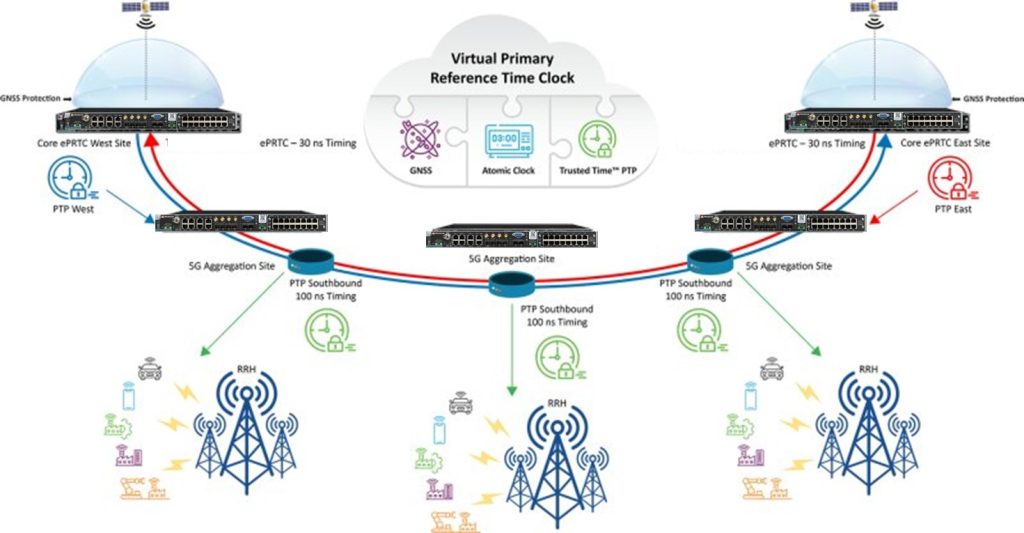
The Virtual Primary Reference Time Clock (vPRTC) represents a modern, distributed architecture for time synchronization that overcomes the limitations of classical PRTC systems. Unlike traditional solutions that rely on physical reference clocks, vPRTC uses virtual resources—a combination of GNSS (Global Navigation Satellite Systems) signals, low-latency optical links, and advanced network algorithms—to provide high precision and reliability in time distribution.
Technological Foundation: The PTP Protocol
At the core of the vPRTC architecture is the Precision Time Protocol (PTP, IEEE 1588)—a standardized protocol that enables precise time distribution across IP networks. PTP allows for time synchronization with nanosecond accuracy, which is crucial in applications where minimal time delay variation is required.
Resilience to GNSS Disruptions
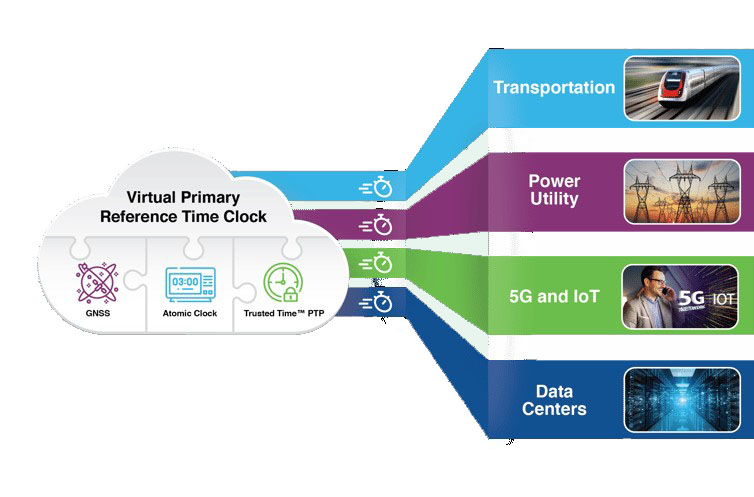
One of the key advantages of vPRTC systems is their resilience to disruptions and outages in GNSS signals. Thanks to the ability to use multiple time sources and internal mechanisms for anomaly detection and correction, vPRTC maintains accuracy even when GNSS signals are unavailable. This makes it an ideal solution for critical sectors such as:
- 5G base stations,
- smart city infrastructure,
- financial institutions,
- industrial facilities with high availability requirements.
Flexibility and Scalability
Thanks to virtualization, vPRTC can be easily integrated into existing infrastructure and allows for rapid deployment and scaling without the need for additional physical devices. The architecture is adaptable to various network environments – including IP, optical, and hybrid networks – enabling broad application across different industries and geographic locations.
Conclusion
The Virtual Primary Reference Time Clock represents the next step in the evolution of time synchronization—a solution that combines reliability, flexibility, and resilience in line with the demands of the new generation of networks and applications. As such, vPRTC is an indispensable part of modern infrastructure striving for high precision and operational security.